
Marketing for Diesel Repair Shops
A diesel customer is rarely browsing. They are on a shoulder, in a yard, or looking at a truck that will not start, and they are calling whoever comes up first and answers.
- Customer state
- Usually broken down, usually now
- Decision driver
- Who answers and can take it in
- Second revenue line
- Fleet accounts, recurring
- Engine build
- $1,900 + $80/mo
- Ad management
- From $500/mo per channel
Diesel repair has the shortest consideration window of any trade we work in. Nobody researches diesel shops for fun. They search when something has already gone wrong, usually with a vehicle that earns money while it runs and costs money while it sits.
That makes marketing for diesel repair shops unusually simple to describe and unusually unforgiving to execute. Be findable, load fast, and answer the phone. Miss any one and the next shop gets the truck.
Two customers, not one
The urgent retail customer is the one most shops think about. A pickup owner, a weekend truck, a breakdown. High intent, low loyalty, found through search.
The fleet customer is worth more and is found differently. A fleet manager with eight trucks is a relationship, not a search result, and the work recurs for years. Most diesel marketing ignores this entirely, which is why most diesel shops have no system for it.
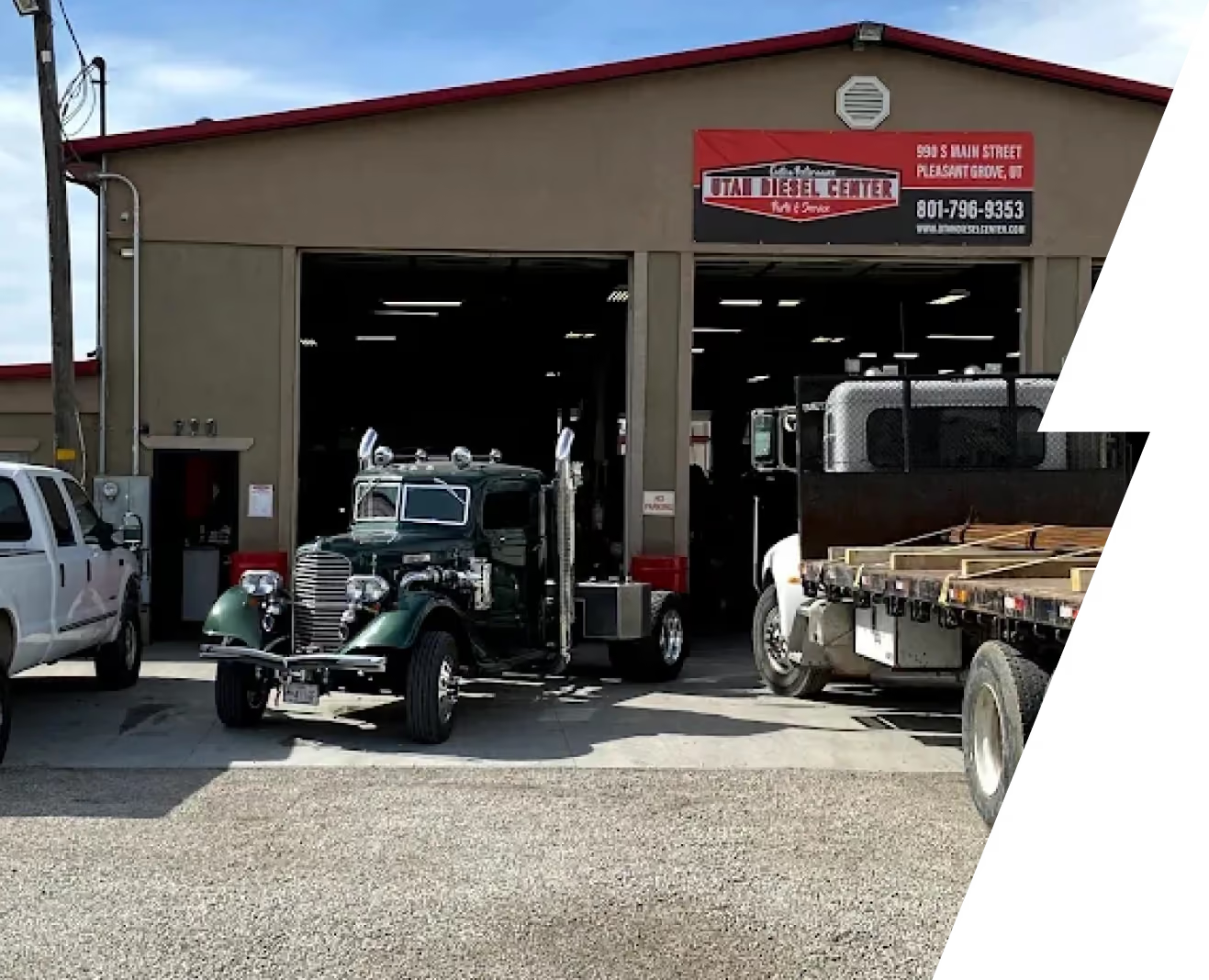
Google and Meta campaigns, a site rebuild off Thrive, and SEO. The rebuild mattered as much as the ads, because a slow site loading on a phone at the roadside is a lost call regardless of how good the campaign is.
What the website has to do
Almost every diesel search is on a phone, often on bad signal, often by someone standing next to the problem. The site has about three seconds.
- Phone number visible and tappable without scrolling
- Loads fast on a weak mobile connection
- Says clearly what you work on, by make and by class
- Says where you are and whether you do mobile or recovery
- Hours, including whether you take emergency calls
- Nothing else above the fold, because nothing else matters in that moment
The fleet side runs on follow-up
Fleet work is won slowly and kept for years. It needs a different system from the retail side: a record of every fleet contact, scheduled check-ins, service reminders based on the last visit, and a quote follow-up that does not rely on anyone remembering.
That lives in the CRM rather than in advertising, and it is where the durable revenue in a diesel shop actually sits.
Retail versus fleet
| Retail breakdown | Fleet account | |
|---|---|---|
| How they find you | Search, map pack | Relationship and referral |
| Decision speed | Minutes | Weeks |
| What wins it | Answering and availability | Reliability and follow-up |
| Value | One job | Recurring, for years |
| Where the system lives | Ads and local SEO | CRM and scheduled contact |
What marketing for diesel repair shops includes
Search campaigns around the breakdown terms people actually type, local SEO for the map pack, a site that loads on a phone, AI phone answering so a 6pm breakdown call does not hit voicemail, and a CRM that keeps the fleet side organised.
Fix capacity before demand
If your bays are full and you are quoting three weeks out, advertising will make that worse rather than better. More calls you cannot serve generates annoyed customers and bad reviews, and you will have paid for the privilege.
The useful work at that point is pricing, scheduling and possibly hiring. We would rather say that at the audit than take a monthly fee to make your bottleneck louder.
Questions we get asked
What marketing actually works for a diesel shop?
Local search, a fast mobile site, and answering the phone. In that order, and the third one decides more jobs than the first two combined. A breakdown customer calls down a list until someone picks up.
Should I advertise to fleets or retail customers?
Advertise to retail, because that is where search intent lives. Win fleets through relationships, referrals and consistent follow-up, which is a CRM job rather than an advertising one.
Is Google Business Profile important for diesel repair?
It is often the whole thing. A stranded driver searching on a phone sees the map pack first, and the profile decides whether they call you or the shop two miles further on.
Why does site speed matter so much here?
Because the customer is standing next to a broken truck on a phone with two bars. A site that takes six seconds has already lost to one that took two.
Do I need both Google and Facebook ads?
Start with Google. Breakdown demand is search demand. Facebook is useful for fleet awareness and hiring technicians, which is a real problem for most shops, but it is the second move.
How do I get more fleet accounts?
Track every fleet contact properly, follow up on a schedule, and send service reminders based on their last visit. Most shops do this from memory and lose accounts to shops that do it from a system.
What about emergency and after hours calls?
Those are the highest value calls you get and the most commonly missed. An AI agent answering at 9pm captures the details and texts the driver back, which usually holds them until morning.
See what breakdown searches you are missing
The audit covers your local search visibility, site speed on mobile, and how many calls are going unanswered after hours.
Or hear it yourself. 385-355-8303 rings the same AI agent our clients use.